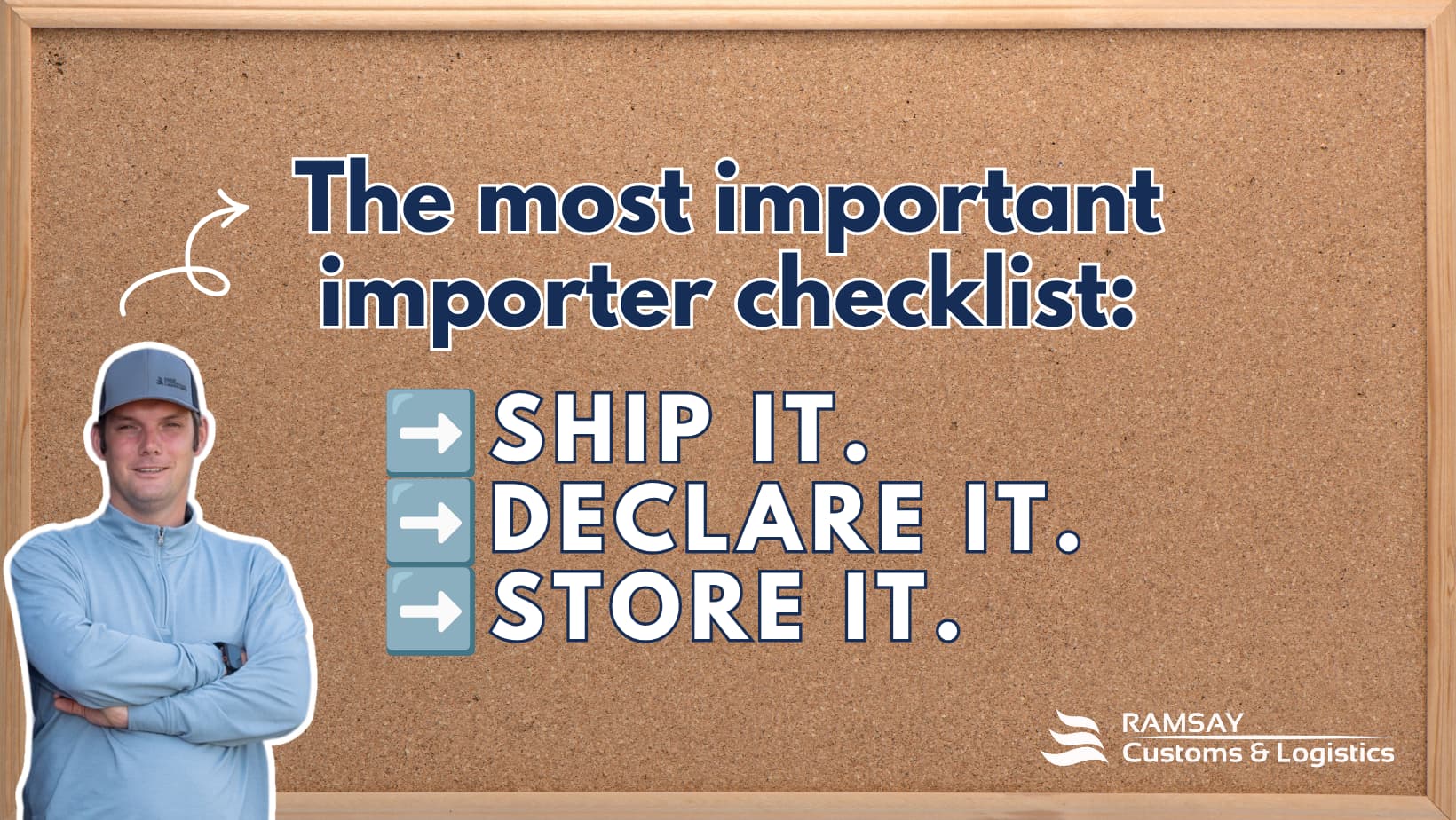
Ship It, Declare It, Store It: The Three-Step Checklist Calgary Importers Keep Skipping
Published: August 12, 2026
Ask a Calgary importer what happens to a shipment and you’ll usually get the three-word version: it ships, it gets declared, it gets stored. Simple, in theory.
In practice, each of those three words hides a decision most businesses make once and then forget about. Insurance gets set up for the first shipment and never revisited. The Statement of Account gets glanced at, not read. Storage gets figured out on the fly, if it gets thought about at all.
None of that catches up with you, until it does. Here’s what ‘Ship It. Declare It. Store It.’ actually means for a customs broker Calgary importers rely on and where the real risk sits in each one.
Ship It: The Insurance Question Nobody Asks Until It’s Too Late
Here’s a misconception we run into constantly: importers assume their freight forwarder or cross border customs broker automatically insures their goods in transit. It doesn’t work that way, and we’ve flagged this before in our breakdown of what every shipper needs to know about cargo insurance.
The reality, spelled out plainly: insurance only gets arranged when you tell us to arrange it. Give us written instructions ahead of time, and we can declare the value of your goods under our open marine cargo policy and get you a certificate of insurance on request. If that coverage isn’t the right fit for what you’re shipping, we’ll point you to a broker who can build something that is. Either way, it doesn’t happen automatically, it happens because you asked.
For Calgary shippers moving freight across the border by truck, that gap matters more than people expect. A carrier’s legal liability limit is often far below the actual value of what’s on the trailer. If something goes sideways at the border or mid-haul, “the carrier is liable” doesn’t mean “the carrier covers your loss.”
Bottom line for Ship It: know your Incoterms, know when liability shifts to you, and put insurance instructions in writing before the truck leaves the yard, not after something happens to it.
Declare It: The Part That Changed on January 31
This is the one most Calgary importers have gotten too comfortable with.
For the last couple of years, there’s been some breathing room here. Miss a CARM payment? CBSA looked the other way. Statement of Account felt more like a suggestion than a deadline. That breathing room is gone. The CBSA’s CARM transition measure (the one waiving late payment penalties and interest) officially ended January 31, 2026. Overdue balances now rack up penalties, and interest started accruing on unpaid amounts starting with the February 25, 2026 statement. If your business has been treating your Statement of Account casually, this is the month that catches up with you.
Before CARM, your broker handled the money side quietly in the background, we billed you, we paid CBSA, everyone moved on. That’s not how it works anymore. As we’ve laid out in how Calgary importers can manage their Statement of Account, CBSA releases your SOA through the CARM Client Portal on the 25th of every month, and paying it is now your responsibility directly, not something that happens behind the scenes on your behalf.
What changed on January 31, 2026, specifically: the penalty and interest waiver CBSA had been running since the CARM rollout ended. Overdue balances from the January statement onward are now subject to late payment penalties, and interest started showing up on statements as of February 25. If your business got comfortable during the waiver period, this is the point where that comfort gets expensive.
This is also a good moment to check two things most Calgary importers haven’t revisited in a while:
Is your CARM Client Portal account actually set up correctly? We’ve walked through the most common CARM compliance pitfalls Calgary businesses run into: registration, delegation of access, and financial security are the three places things usually go wrong.
Do you have the right security in place for Release Prior to Payment? If you’re relying on outdated assumptions about RPP bonds, here’s what Canada Customs RPP bonds actually require now.
Bottom line for Declare It: the CBSA customs broker relationship changed. We still classify, clear, and advise; however, the payment obligation sits with you, and it’s no longer being waived.
Store It: The Piece Most Importers Forget to Ask About
Ship It and Declare It get most of the attention. Store It is where things quietly go wrong for businesses that haven’t thought about what happens to their goods between “cleared customs” and “arrived at final destination.”
Warehousing and cargo handling are part of what a full-service freight forwarder coordinates alongside brokerage, not an afterthought bolted on later. If your shipment needs to sit, get consolidated, or get handled before the next leg of its journey, that’s a conversation to have before the goods arrive, not after they’re sitting on a dock with nowhere to go.
Bottom line for Store It: ask about storage and handling requirements at the same time you’re arranging transport and declaring goods, not as a scramble after the fact.
Ship It. Declare It. Store It. Ramsay Handles All Three.
CARM changed the rules. The penalty waiver that gave Calgary importers some slack is gone, cargo insurance still isn’t automatic, and storage still needs to be planned for, not improvised. As a licensed CBSA customs broker working alongside our freight forwarding team, we handle all three pieces so nothing falls through the gap between them.
👉 Contact Ramsay today to review your customs documentation and reduce the risk of border delays.
📧 im*****@*************cs.com